



How to plan your own preschool activities at home
From circle time to centers, preschool is a complicated, wonderful, difficult, and memorable experience. This is the final piece in Mumbling Mommy’s series about preschool. Previous posts discussed the benefits and drawbacks of preschool, how to know if your child is ready for preschool, how to select a preschool, and how to handle behavior
problems.
Preschools are popular places to send our little ones, but children don’t need to attend preschool in order to be successful in school later. You can plan some preschool activities at home to equip your kids with what they’ll need moving forward. Whether you don’t have room in your budget for preschool or just want a little more time with your child before she goes off to school full time, there are plenty of things you can do together on your own.
20 Preschool Activities at Home
1. Read together. This is a biggie. Keep books everywhere: a stack in your child’s bedroom, a basketful in the family room, and couple in the car.
2. Make crafts. Buy a kit or look online for ideas. My daughter and I enjoy dltkkids.com and crayola.com. Sometimes we just do a Google search for free printable coloring pages.
3. Create your own sensory box. Fill a large, shallow plastic storage box with uncooked rice, beans, pasta, or bird seed. Add some scoops, cups, spoons, and tiny toys, and let your child play. Any spills can be swept up afterward, or set the box on a large blanket for easier cleanup.
4. Buy a preschool skills workbook. These are only a couple of dollars in the book area at any big box store or drugstore. My daughter loves doing mazes, dot-to-dots, tracing letters, counting objects in pictures, matching, and identifying patterns, and she feels like a big girl when she does “school work.”
5. Play educational games online. Starfall.com and pbskids.org are favorites in our house.
6. Turn your back yard into a wildlife observation area. Allow your child to help you hang and fill birdfeeders. Set out a hummingbird feeder (filled with one part dissolved white sugar to four parts boiled water; no red food dye needed). Put out bird houses and a bird bath. Grow flowers that attract butterflies. Plant berry-producing bushes to feed birds.
7. Play in the yard or at a park. Children learn through swinging, skipping rope, walking on stilts, blowing bubbles, jumping in leaves, splashing in the kiddie pool, catching bugs, collecting interesting sticks, and more.
8. Grow a garden. Kids love learning where food comes from. Tomatoes, green beans, zucchini, and cucumbers are especially easy for novices to grow, and you don’t need lots of space for them. Don’t forget to plant sunflowers for fun, too!
9. Visit the library. In addition to great books, most libraries have programs for children ranging from story time to summer reading clubs.
10. Make homemade play dough. This recipe is particularly good because it uses powdered Kool-Aid mix, which smells wonderful.
11. Plan day trips to local attractions. Zoos, museums, and art exhibits are fun and educational.
12. Get busy in the kitchen. Young children love to help measure and pour ingredients for cookies or stir banana bread batter. Things may get messy. Try not to stress.
13. Bring the snow indoors during the winter. Fill a large mixing bowl with snow and set it in the kitchen sink. Add measuring cups, Little People figures, toy cars, or whatever you want. Pull up a sturdy chair for your child to stand on and let them play!
14. Visit local seasonal attractions. Pick strawberries or blueberries on a farm during the summer. Return in the fall to pick pumpkins. During the Christmas season, drive out to view light displays.
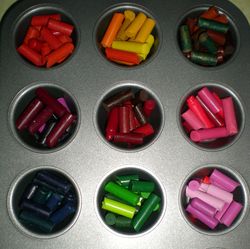
15. Make recycled crayons. Gather all your broken crayon bits and melt them in a muffin tin in the oven to make new chunky crayons.
16. Bake holiday-themed cookies. My daughter and I have made easy Thanksgiving turkey cookies and Christmas Rudolph the Red-Nosed Reindeer cookies.
17. Go camping at a state or national park. If you aren’t the camping type, stay in a hotel or cabin. Hike the trails. Go swimming. Visit the nature center and participate in interpretive programs.
18. Do wacky science experiments.
19. Play board games. Candy Land, Chutes and Ladders, and Hi Ho! Cherry-O are excellent choices.
20. Above all, love on your child!
Keep it Simple
Preschool activities at home don’t have to be complicated. These are just a few of the simplest preschool activities at home I’ve found — add yours in the comments.
Let’s connect on social media too:
Mumbling Mommy on Facebook
Mumbling Mommy on Twitter
Mumbling Mommy on Pinterest
Category: Arts & CraftsTags: crafts
